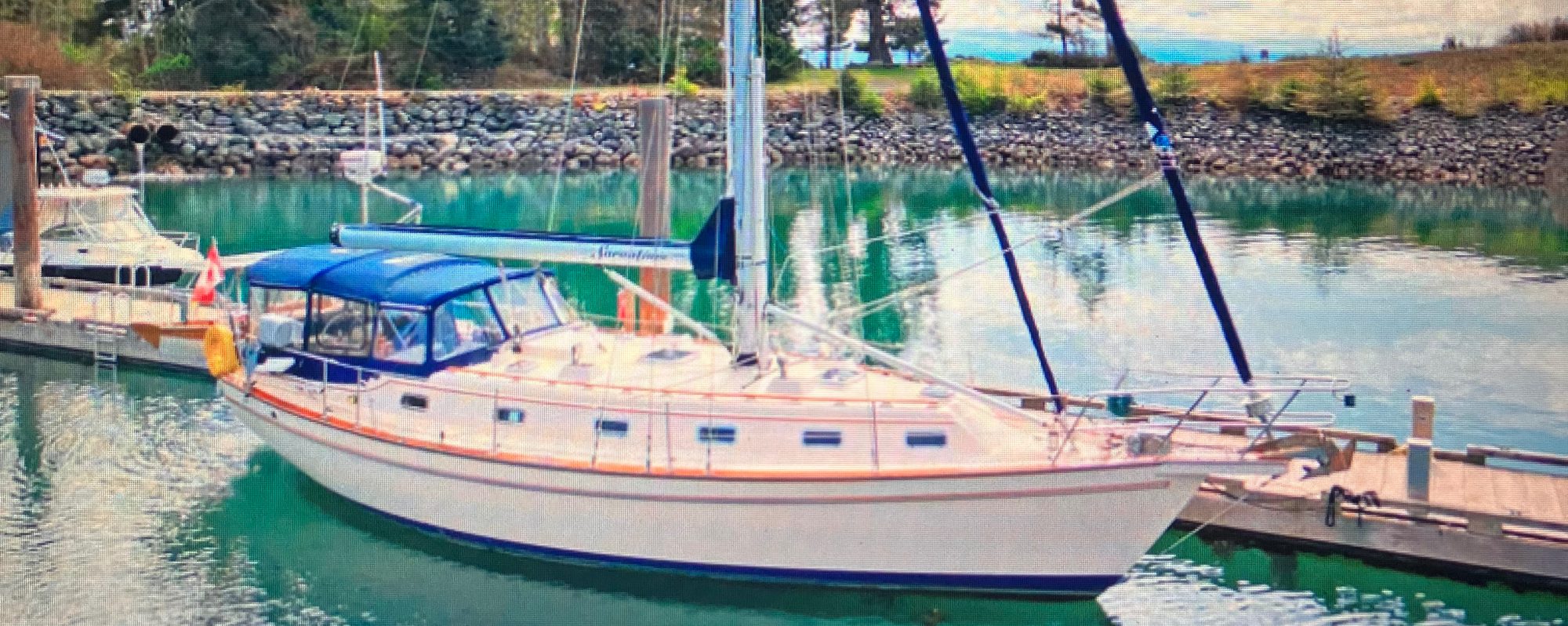
The dream had lived in me for years, but choosing to pursue it solo meant facing more than the dangers of the ocean. It also meant facing the doubts of friends and family, often expressed through comments like, “You’re not going to do that,” or, “I hope she knows what she’s doing.” Even when those words come from love and concern, they can quietly persuade us to abandon dreams we have only just begun to say out loud.
For me, those comments created doubt. But they didn’t stop me.
I bought the boat, prepared her for offshore sailing, and set out to leave Canada aboard Sarantium alone.
I believe this is one of the biggest reasons more women don’t pursue challenges like this. Concern, even when it comes from the best intentions, can make women question whether they belong in spaces and adventures traditionally seen as belonging to men.
I chose to ignore most of those conversations and comments. Instead, I listened to the few people who saw the part of me that was capable.
By the time I arrived in Victoria, however, I had reached out to potential crew and secured two women to join me for the voyage.
Looking back, I think my decision came down to the nervousness I feel every time before I pull up the anchor and hoist the sails. That feeling is normal. It reflects an awareness that being alone on the vast ocean comes with limitations and dangers. I have enormous respect for the sea.
It wasn’t that I lacked confidence in myself. It was that I didn’t yet fully trust that confidence.
Perhaps I had absorbed the indirect doubts of the people around me and didn’t know where to place my own nervousness about leaving Canada as a solo sailor.
Since then, I’ve met enough women sailing solo to recognize that my experience is not unique. I’ve learnt that nervousness is normal and that, rather than holding me back, it can make me a more diligent sailor.
I’ve learnt that I can make sound decisions, trust my love of learning, and rely on the support around me when I need help with something beyond my knowledge or abilities.
To be brutally honest, I’ve learned that solo sailing is far better and much safer than sailing with people who aren’t a good fit. When I’m alone, I can focus on the tasks, the boat, and myself. I don’t have to manage a crew, justify my decisions to others, or let others affect my mood and emotions. While island hopping, this isn’t a problem. However, when crossing oceans, managing my own sleep, nutrition, the boat, and navigation leaves little energy for socializing or having discussions and or worse arguing about my decisions as the captain.
People often ask me, don’t you get lonely? I can honestly say that I’ve never felt lonely underway. However, once I’m on anchor and in one place that’s when I crave company.
So here I am in New Zealand. I’ve sailed with crew, and I’ve sailed solo. The leg I was most nervous about was from Tonga to New Zealand.
I sailed it solo.
From here on, I’m no longer going to look for crew because I think I need them. I’ll happily welcome family and friends aboard to share some fun sailing amongst the islands, or meet me in beautiful anchorages for a piña colada.
I’ve come a long way from the woman who wondered whether she could trust herself enough to do this.
Now I know I can.
I have reached the end of the South Pacific, and the dream is still unfolding. 🌊⛵️
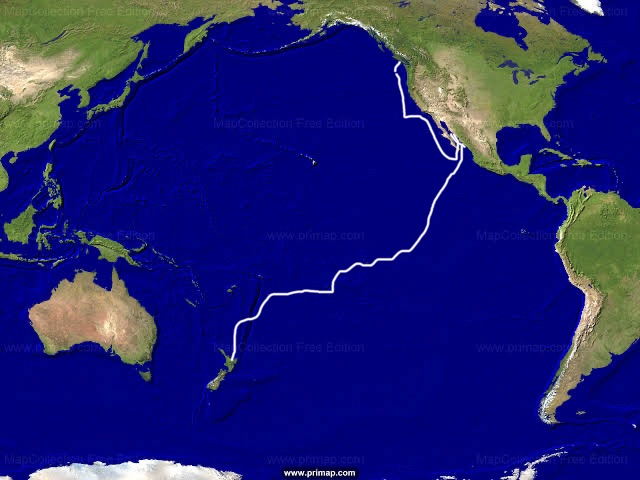
I’ve sailed approximately 8,500 nautical miles from Nanaimo, British Columbia, Canada, to the Sea of Cortez, Mexico. From there, I travelled to the Marquesas Islands, the Toumotus, Tahiti, Cook Islands, Tonga, the Republic of Minerva and finally the North Island of New Zealand.
Thanks for reading!

